Unit count follows guest count and event length. A common planning ratio is 1 standard unit per 100 guests for a 4-hour event; a full-day festival adds roughly one unit per 75 guests to cover heavier use, and serving…
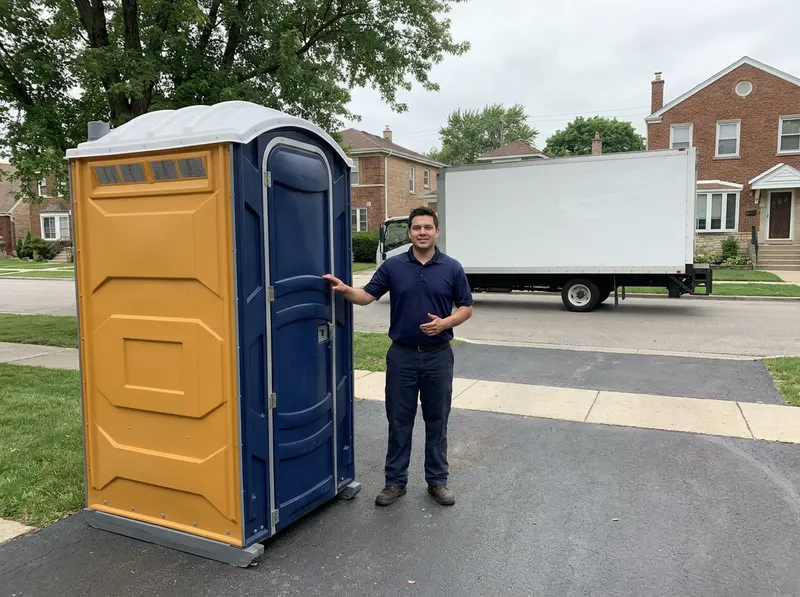
Unit count follows guest count and event length. A common planning ratio is 1 standard unit per 100 guests for a 4-hour event; a full-day festival adds roughly one unit per 75 guests to cover heavier use, and serving alcohol raises usage by about 30%, which is why beer gardens in Logan Square and Avondale typically add a spare unit or two. A 300-guest wedding reception in Lincoln Park running six hours generally lands at 3, 4 units plus at least one hand-wash station. For a 5K along the lakefront near Grant Park, race organizers often stage a bank of 6, 10 units at the start/finish line rather than spreading them thin.
Deluxe flushing units suit weddings, corporate tents, and church events in Hyde Park and Bronzeville where guests expect a sink, foot-pump flush, and interior light; standard units suit block parties in Pilsen and Bridgeport, construction-adjacent festivals, and cost-driven bookings. If the event is public and expected to draw seniors or wheelchair users, at least one ADA-accessible unit is required, its 60-inch interior turning radius and ground-level entry meet accessibility guidance, so a Uptown street fair or a Rogers Park community picnic should include one per cluster.
Chicago event placement carries rules worth knowing before delivery. Units set on a public street, sidewalk, or park space (Millennium Park, Maggie Daley Park, The 606 trail access points) generally require a permit from the city or the Chicago Park District, and the permit holder, not the rental provider, is responsible for securing it. Placement needs a level, firm surface within about 40 feet of where the delivery truck can park, since the driver hand-rolls units the final stretch. Winter events face freezing tanks, so a non-freeze additive is added to the holding tank in units placed December through February.
How it works in order: 1) confirm the date, guest count, and exact street address; 2) choose standard, deluxe, or ADA units and any hand-wash stations; 3) a delivery window is set, usually the day before the event; 4) units are placed on the level spot and staged; 5) pickup happens the morning after, or same-day for a single-session booking. A dumpster or trash service is a separate arrangement, an event toilet rental covers only the restroom units and their servicing, not general event waste.
Every job gets a firm, written price after a free on-site visit.
Tell us about your event portable toilet rental job in Chicago and we'll send a clear, written quote, usually the same day.
 Windy City Portable Toilet Rental