ADA units differ from standard portable toilets in three measurable ways: the floor sits at grade so a wheelchair rolls straight in, the interior clears a 60-inch turning radius required by the 2010 ADA Standards, and…
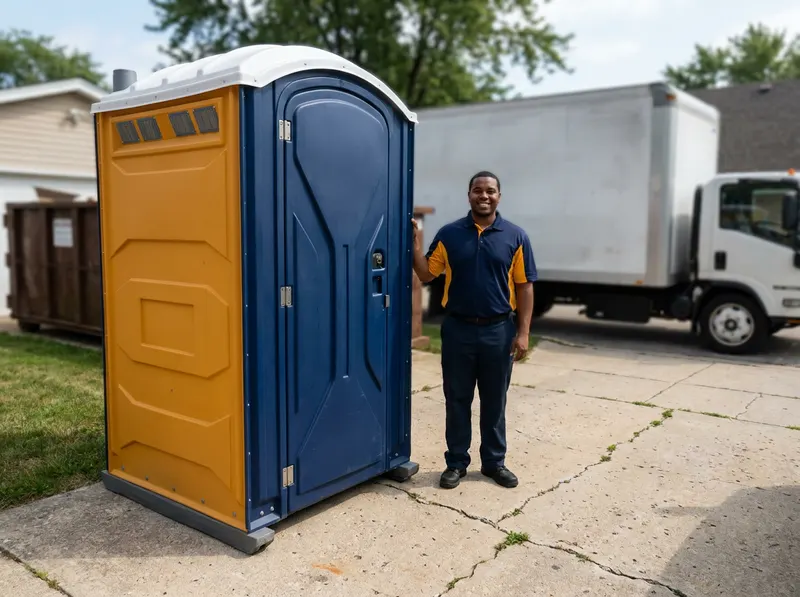
ADA units differ from standard portable toilets in three measurable ways: the floor sits at grade so a wheelchair rolls straight in, the interior clears a 60-inch turning radius required by the 2010 ADA Standards, and grab bars are mounted on the side and rear walls. A standard construction unit runs roughly 44 inches wide inside and has a stepped entry, which is why it does not satisfy accessibility requirements for a public event or a jobsite serving a mixed crew. One crucial non-obvious point: a temporary event open to the public in Chicago is expected to provide accessible facilities, and the accessible unit must sit on a firm, level surface with an unobstructed path, not on grass that a wheel can sink into.
Decision-fit depends on the setting. A festival on the grass fields near Logan Square or Humboldt Park should pair the ADA unit with a firm mat or a paved path so the ground-level entry stays usable. A block party in Pilsen or Bridgeport works well with a single ADA unit placed close to the curb where the pavement is already flat. Larger public gatherings near Grant Park, Millennium Park, or Maggie Daley Park often need multiple accessible units spaced so no attendee crosses the whole site. On a Lincoln Park or Hyde Park construction site, the accessible unit typically goes near the trailer entrance where the ground is compacted. The trade-off is footprint against compliance: an ADA unit occupies a larger pad than a standard toilet, so the placement spot needs about 5 by 5 feet of clear, level ground.
Placement in Chicago carries a few real constraints. A unit set on a public sidewalk, parkway, or street in Wicker Park, Rogers Park, Bronzeville, Uptown, or Avondale generally requires a permit from the city, while a unit on private property, a driveway, or a fenced lot usually does not. Winter placement matters too: the ground-level door swing needs to stay clear of snow piles and ice, so a plowed, salted pad keeps the accessible entry open through a Chicago cold snap. Our team confirms the exact placement, service frequency, and total on a free on-site visit before delivery.
Booking runs in five plain steps. First, call (872) 263-3422 or text a photo of the spot. Second, confirm the delivery date and the length of the rental. Third, the unit is dropped and leveled on the pad you pick. Fourth, pumping is scheduled at the interval the site needs. Fifth, the unit is removed at the end of the term. The $250 minimum applies to the shortest standard rental; pricing below that figure is not offered.
Every job gets a firm, written price after a free on-site visit.
Tell us about your ada-accessible portable toilet rental job in Chicago and we'll send a clear, written quote, usually the same day.
 Windy City Portable Toilet Rental